Diamantes de laboratorioLab-grown diamonds

Elegimos cada diamante por su luz.We choose every diamond for its light.

Los buscamos uno a uno y solo te mostramos los que superan nuestros controles.

We search for them one by one and show you only those that pass our checks.

Lo primeroFirst things first

Es un diamante. Punto.It’s a diamond. Period.

Átomo por átomo, un diamante de laboratorio y uno de mina son lo mismo: carbono, cerca del 99.95 %,1 ordenado en la misma estructura cristalina. Tienen en esencia las mismas propiedades químicas, físicas y ópticas, y a simple vista o con lupa no se distinguen.2

Atom for atom, a lab-grown diamond and a mined one are the same: carbon, about 99.95%,1 arranged in the same crystal structure. They have essentially the same chemical, physical and optical properties, and neither the eye nor a loupe can tell them apart.2

Piensa en una orquídea. La que florece en la selva y la que florece en un invernadero son la misma flor; nadie diría que una es menos orquídea que la otra. Con el diamante pasa igual: cambia dónde nace, no lo que es.

Think of an orchid. One that blooms in the rainforest and one that blooms in a greenhouse are the same flower; no one would call either less of an orchid. Diamonds are no different: where it’s born changes, not what it is.

Crece como en la TierraGrown the way the Earth does it

Nuestros diamantes incoloros crecen con presión y calor, como en las profundidades del planeta. El método se llama HPHT.3

Our colorless diamonds grow under pressure and heat, as they do deep inside the planet. The method is called HPHT.3

Cómo se hacenHow they’re made →

Igual de duro, igual de brillanteJust as hard, just as brilliant

Un 10 en la escala de Mohs, la más alta. La misma luz, el mismo fuego.2

A 10 on the Mohs scale, the highest. The same light, the same fire.2

Lo básicoThe basics →

¿Se nota la diferencia?Can anyone tell?

Solo un laboratorio gemológico, con equipos especializados, puede saber de dónde viene.2

Only a gem lab, with specialized equipment, can tell where it came from.2

Preguntas frecuentesFAQ →

Lo que cambia es el origen. Y el precio.

What changes is the origin. And the price.

Quiénes somosAbout us

Pocos diamantes, muy bien elegidos.A select few, chosen with care.

Noga Diamonds tiene su sede en Panamá. Vendemos diamantes de laboratorio sueltos, con trato directo: tú nos cuentas qué buscas y nosotros salimos a encontrarlo, diamante por diamante.

Noga Diamonds is based in Panama. We specialize in loose lab-grown diamonds and work with you directly: you tell us what you’re looking for, and we go find it, one diamond at a time.

Noga (נֹגַהּ) significa “luz” y “resplandor” en hebreo.45 Es también el nombre hebreo de Venus, el planeta más brillante de nuestro cielo.6

Noga (נֹגַהּ) means “light” and “radiance” in Hebrew.45 It’s also the Hebrew name for Venus, the brightest planet in our sky.6

  1. 01

    Elegimos por la luzChosen for their light

    El certificado es la base. Luego miramos cómo se comporta cada diamante con la luz y nos quedamos con los que destacan entre los de su forma.

    The lab report is the foundation. Then we look at how each diamond handles light and keep the ones that stand out among others of the same shape.

  2. 02

    Te decimos las cosas como sonWe speak plainly

    Cada dato técnico que publicamos lleva su fuente. Si un diamante tiene algún tratamiento, lo sabes antes de elegir. Y si ninguno está a la altura, te lo decimos.

    Every technical fact we publish comes with its source. If a diamond has been treated, you’ll know before you choose. And if none of them measure up, we’ll say so.

  3. 03

    Un trato personalPersonal service

    Hablas con personas, no con un catálogo. Te enviamos los videos y los datos de cada diamante y te acompañamos hasta que decidas.

    You talk to people, not a catalog. We send you each diamond’s videos and data, and we’re with you until you decide.

Las 4CThe 4Cs

Dicen mucho, pero no lo dicen todo.The 4Cs tell you a lot, but not everything.

Quilates, color, pureza y corte. En inglés se dicen Carat, Color, Clarity y Cut: cuatro palabras que empiezan con C, y de ahí viene el nombre de las 4C.7 Robert M. Shipley, fundador del GIA, acuñó la expresión en los años cuarenta. A principios de los años cincuenta, estos cuatro criterios se convirtieron en la base del sistema de clasificación que hoy usa todo el sector.789 Son claros y fáciles de comparar, aunque ninguno mide directamente la luz que devuelve cada diamante.

Carat, color, clarity and cut: the four factors GIA founder Robert M. Shipley dubbed the 4Cs in the 1940s. In the early 1950s they became the basis of the grading system the whole industry uses today.789 They’re clear and easy to compare, but none of them directly measures the light a diamond gives back.

El grado de corte, solo en los redondosA cut grade for rounds only

Hoy, el GIA asigna un grado de corte únicamente a los brillantes redondos. Los diamantes de forma oval, pera o esmeralda reciben grados de pulido y simetría, pero no de corte.10

Today GIA gives a cut grade only to round brilliant diamonds. Ovals, pears and emerald cuts get grades for polish and symmetry, but not for cut.10

Mismo grado, distinto aspectoSame grade, different look

Cada grado de corte abarca un rango de proporciones. Por eso, como explica el propio GIA, dos diamantes con el mismo grado pueden verse diferentes.11

As GIA itself explains, each cut grade spans a range of proportions, so two diamonds with the same grade won’t necessarily look alike.11

Los grados altos ya son lo habitualTop grades are now the norm

La mayoría de los redondos del mercado reciben Excellent o Very Good, y el GIA reconoce que un diamante Triple Excellent es fácil de encontrar.1012

Most round diamonds on the market are graded Excellent or Very Good, and GIA notes that a Triple Excellent diamond is easy to find.1012

Lo que mide el certificadoWhat the report grades

  • QuilatesCarat
  • Color
  • PurezaClarity
  • Corte (solo en redondos)Cut (rounds only)

Lo que evaluamos ademásWhat else we measure

  • Brillo y fuego, medidos en videoBrilliance and fire, on video
  • Simetría ópticaOptical symmetry
  • Mapa de luz ASETASET light map
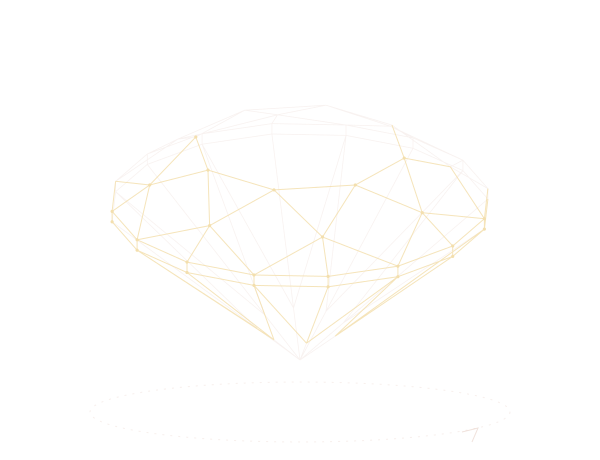
  • Modelo 3D, con cada faceta medidaMeasured 3D model, facet by facet

Para nosotros, la última palabra la tiene la luz.

For us, light has the final say.

PruébaloTry it

Mueve el control y compara.Move the slider and compare.

Cada C tiene su escala. Elige una y mira cómo cambia el diamante; el corte es el que decide la luz.13

Each C has its own scale. Pick one and watch the diamond change; cut is what decides the light.13

Las 4C, explicadasThe 4Cs, explained

Elige una C y mueve el control.Pick a C and move the slider.

A tamaño real en tu pantalla.Shown at true size on your screen.

0.25 ct ≈ 4.1 mm (aprox.approx. 3.9–4.3 mm)

0.50 ct ≈ 5.2 mm (aprox.approx. 4.9–5.4 mm)

0.75 ct ≈ 5.9 mm (aprox.approx. 5.6–6.2 mm)

1 ct 6.20–6.80 mm

2 ct ≈ 8.2 mm (aprox.approx. 7.8–8.6 mm)

3 ct ≈ 9.4 mm (aprox.approx. 8.9–9.8 mm)

4 ct ≈ 10.3 mm (aprox.approx. 9.8–10.8 mm)

5 ct ≈ 11.1 mm (aprox.approx. 10.6–11.6 mm)

Diamantes redondos vistos de frente. Uno de 1 ct mide, según su profundidad, entre unos 6.20 y 6.80 mm de diámetro;14 las demás medidas son aproximadas, calculadas a partir de ese rango.Round diamonds seen face up. Depending on its depth, a 1 ct round measures roughly 6.20 to 6.80 mm across;14 the other sizes are approximate, calculated from that range.

Cómo elegimosHow we choose

No elegimos solo a ojo.We don’t choose by eye alone.

Con la iluminación de una joyería, casi cualquier diamante brilla. Por eso no nos basta con mirarlo: también lo medimos, faceta por faceta y en video.

Under jewelry-store lights, almost any diamond sparkles. So looking isn’t enough: we also measure every diamond, facet by facet and on video.

  1. 1

    Primero, el certificadoFirst, the report

    Cada diamante llega con el certificado de su laboratorio. Cuando es GCAL, buscamos el grado 8X en las formas que esa escala evalúa.17 Es donde empezamos.

    Every diamond comes with its lab report. When it’s from GCAL, we look for the 8X grade in the shapes that scale covers.17 That’s where we start.

  2. 2

    Faceta por facetaFacet by facet

    Revisamos su modelo 3D, que registra el ángulo y la orientación de cada faceta.18

    We review its measured 3D model, which records the angle and orientation of every facet.18

  3. 3

    El mapa de luzThe light map

    Estudiamos su mapa ASET y su simetría óptica.19

    We study its ASET map and its optical symmetry.19

  4. 4

    Brillo y fuego, en cifrasBrilliance and fire, by the numbers

    Los medimos en video, en movimiento y con distintas luces.

    We measure them on video, in motion and under different lights.

  5. 5

    Solo los mejores de cada formaOnly the best of each shape

    Comparamos cada diamante con los demás de su forma y te presentamos únicamente los que quedan en lo más alto.

    We rank each diamond against others of the same shape and show you only the ones at the top.

El corteThe cut

“Corte Excellent” no siempre significa lo mismo.“Excellent cut” doesn’t always mean the same thing.

Estos son los niveles, de menor a mayor. Cada uno exige más que el anterior.

Here are the levels, from lowest to highest. Each one is harder to reach than the last.

De cada 100 000 diamantes redondosOut of every 100,000 round diamonds
  1. TodosAll100 000100,000
  2. Triple Excellent (3X)unos about 85 00085,000
  3. GCAL 8Xmenos de fewer than 10001,000
  4. Nogamenos de fewer than 202 %2%de los redondos GCAL 8X: los de mejor desempeño óptico.of GCAL 8X rounds: the best optical performers.

Triple Excellent: estimación de GCAL (2021); el GIA no publica un porcentaje.2012 GCAL 8X: estimación de GCAL.17 Noga: de cada 100 redondos GCAL 8X, nos quedamos con unos 2, los de mejor desempeño óptico al compararlos con los demás.

Triple Excellent: GCAL estimate, 2021; GIA doesn’t publish a percentage.2012 GCAL 8X: GCAL estimate.17 Noga: out of every 100 GCAL 8X rounds, we keep about 2, the best optical performers when compared side by side.

  1. 1
    Excellent · IdealCertificadoLab report

    El grado de corte más alto en los certificados habituales: algunos laboratorios lo llaman Excellent, como el GIA, y otros Ideal.21 Pero cada grado abarca un rango de proporciones, así que dos diamantes con la misma etiqueta pueden verse distintos.11 Además, el GIA solo lo asigna a los diamantes redondos.10

    The highest cut grade on a standard lab report: some labs call it Excellent, as GIA does, and others Ideal.21 But each grade covers a range of proportions, so two diamonds with the same label can look different.11 And GIA gives a cut grade only to round diamonds.10

  2. 2
    Triple Excellent3X

    Corte, pulido y simetría con grado Excellent. Muchas tiendas lo presentan como lo máximo, pero es muy común: en 2021, GCAL calculaba que cerca del 85 % de los redondos certificados lo tenían.20 Y aun así, un diamante 3X puede dejar escapar luz.1121 El grado no dice nada sobre corazones y flechas, ni muestra cómo se reparte la luz dentro del diamante.

    Excellent for cut, polish and symmetry. Many stores present it as the best there is, yet it’s very common: in 2021, GCAL estimated that about 85% of graded round diamonds earned it.20 And a 3X diamond can still leak light.1121 The grade says nothing about hearts and arrows, and it doesn’t show how light is distributed inside the diamond.

  3. 3
    Corazones y flechasHearts and arrowsH&A

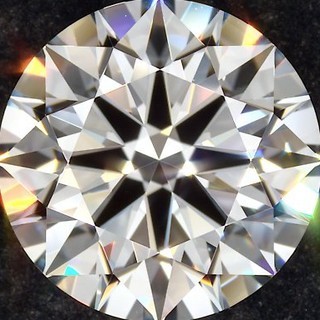
    Un corte de precisión: bajo un visor especial, el diamante muestra ocho corazones y ocho flechas uniformes, señal de que sus facetas están bien alineadas.22 No hay un estándar universal; cada laboratorio y cada vendedor aplica sus propios criterios.23

    Precision cutting: seen through a special viewer, the diamond shows eight hearts and eight arrows, all evenly formed, a sign that its facets are well aligned.22 There’s no universally accepted standard; labs and sellers apply their own criteria.23

    Míralos en un diamante de 1.86 ctSee them in a 1.86 ct diamond
  4. 4
    GCAL 8X8 de 88 of 8

    Excellent en ocho criterios: pulido, simetría externa, proporciones, brillo óptico, fuego, centelleo, simetría óptica y, en los redondos, corazones y flechas (en las demás formas, la estética de la silueta).24 Según GCAL, menos del 1 % de los redondos con corte Excellent lo consigue.17

    Excellent on eight criteria: polish, external symmetry, proportions, optical brilliance, fire, scintillation, optical symmetry and, for rounds, hearts and arrows (for fancy shapes, shape aesthetics).24 According to GCAL, fewer than 1% of Excellent rounds achieve it.17

  5. 5
    NogaNuestra selecciónOur selection

    Más allá del certificado: medimos el brillo, el fuego, el centelleo y la simetría óptica de cada diamante, en video y sobre su modelo 3D, y revisamos su mapa ASET. Son las pruebas que un diamante debe superar antes de que te lo mostremos.

    Beyond the report: we measure each diamond’s brilliance, fire, scintillation and optical symmetry, on video and on its 3D model, and we review its ASET map. Those are the tests a diamond has to pass before we show it to you.

El corteThe cut

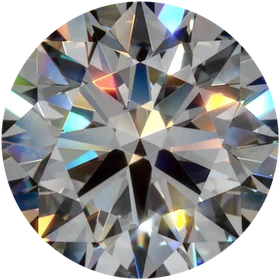
El corte es lo que hace brillar a un diamante.Cut is what makes a diamond sparkle.

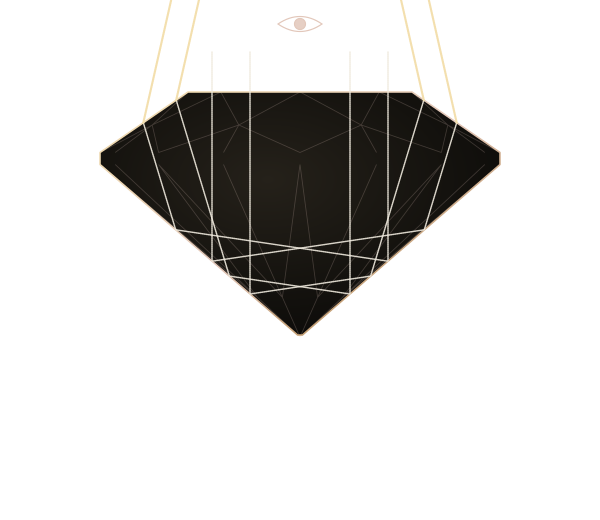
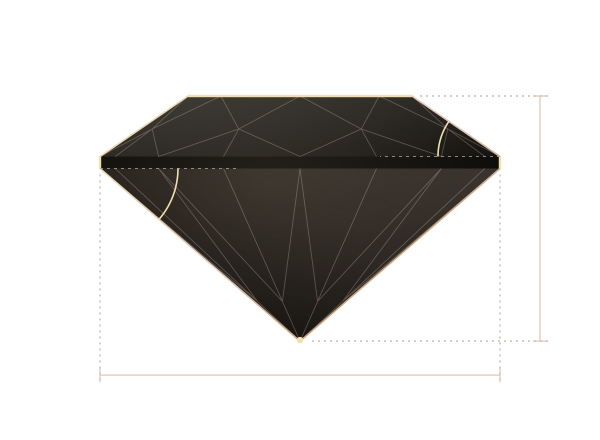
Es la única de las 4C que depende del tallador.25 Sus ángulos deciden si la luz vuelve a tus ojos o se escapa por los lados o por abajo.13

It’s the only one of the 4Cs in the cutter’s hands.25 Its angles decide whether light comes back to your eyes or escapes through the sides or bottom.13

Por qué el corte es lo más importanteWhy cut matters most

Lo que medimosWhat we measure

Cinco claves para leer la luz.Five keys to reading light.

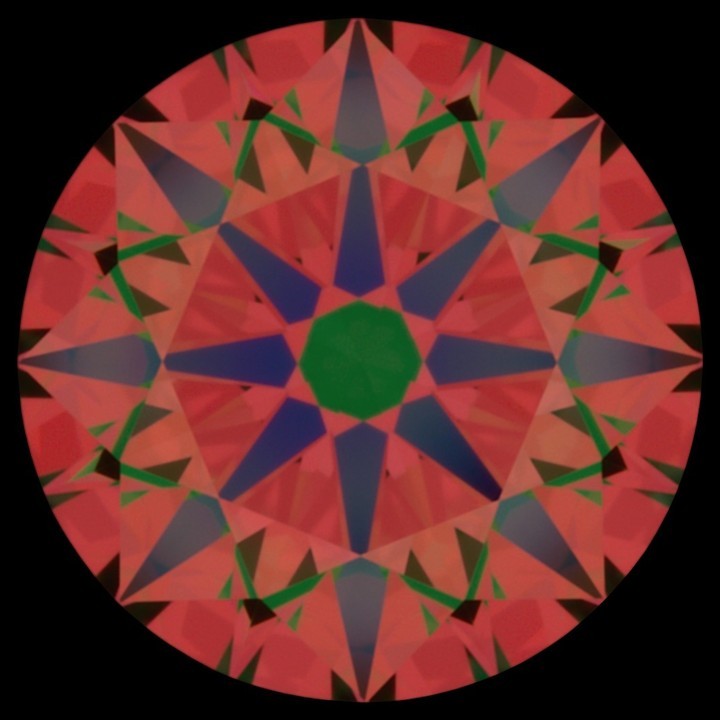
Las zonas más brillantesThe brightest areas Las zonas menos brillantesLess bright areas El contrasteContrast La luz que se escapaLight that leaks out
Mapa ASET del mismo diamante redondo de 1.86 ct.ASET map of the same 1.86 ct round diamond.
BrilloBrilliance
La luz blanca que el diamante te devuelve.26
The white light the diamond returns to you.26
FuegoFire
La luz que se descompone en los colores del arcoíris.26
White light split into the colors of the rainbow.26
CentelleoScintillation
Los destellos y el juego de zonas claras y oscuras que ves cuando se mueven el diamante, la luz o tú.26
The sparkle and the play of light and dark you see whenever the diamond, the light or you move.26
Simetría ópticaOptical symmetry
La regularidad con que se repite el dibujo de luz cuando miras el diamante de frente.17
How evenly the pattern of light repeats when you look at the diamond face up.17
Mapa ASETASET map
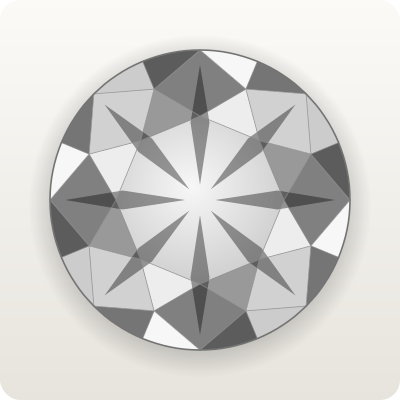
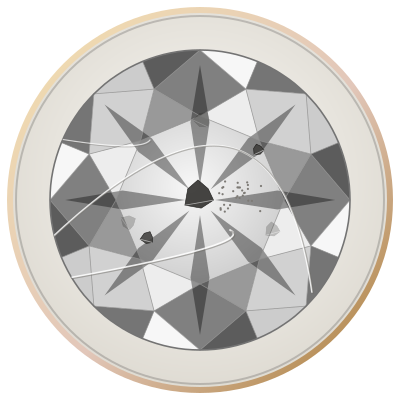
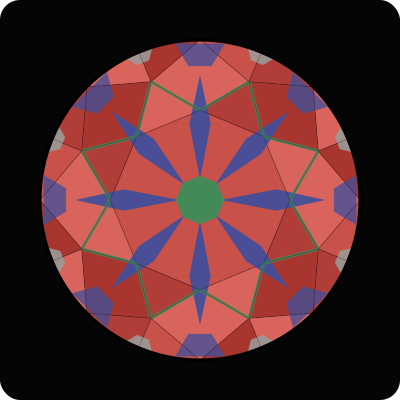
Muestra dónde capta la luz el diamante. Rojo: las zonas más brillantes, las que reflejan la luz más intensa. Verde: las zonas menos brillantes. Azul: el contraste, los reflejos oscuros que le dan carácter. Gris: la luz que se escapa.1918
It shows where the diamond gathers its light. Red: the brightest areas, which catch the strongest light from above. Green: less bright areas. Blue: contrast, the dark reflections that give a diamond its character. Gray: light that leaks out.1918

Cómo medimosHow we measure

Miramos lo que un certificado no muestra.We look at what a report can’t show.

Antes de proponerte un diamante, lo revisamos de cuatro maneras.

Before you see a diamond, we check it four ways.

Modelo 3D3D model

Escaneamos el diamante y obtenemos su modelo 3D, con el ángulo y la orientación de cada faceta.

We scan the diamond to build a 3D model that records the angle and orientation of every facet.

Mapa ASETASET map

En rojo y verde, muestra dónde capta la luz el diamante; en azul, su contraste; en gris, dónde la pierde.18

Red and green show where the diamond gathers light, blue shows its contrast, and gray shows where it loses light.18

Videos realesVideo footage

Lo vemos moverse con una luz suave de oficina y con luces puntuales, que encienden su fuego.

We watch it move under soft office lighting and under spotlights that bring out its fire.

LimpioClear Con veloHazy

Darkfield

Sobre un fondo negro, un diamante con velo se delata. Cuando lo vemos, lo descartamos.

Against a black background, a hazy diamond gives itself away, and we leave it out.

Medimos en lugar de estimar.

We measure rather than estimate.

Así medimos cada diamanteSee how we measure every diamond

Mismo certificado, distinta luz.Same report, different light.

Pocos certificados miden la luz, y ni siquiera esos lo dicen todo: dos diamantes con el mismo certificado pueden brillar de forma distinta.2127 Por eso medimos cada uno.

Few lab reports measure light, and even those don’t tell the whole story: two diamonds with identical reports can still look different.2127 That’s why we measure every one.

Qué mide cada certificadoWhat each report measures

EjemplosExamples

Algunos diamantes que pasaron nuestro filtro.A few diamonds that made the cut.

Cada video muestra el diamante tal como es. Elegimos cada uno midiendo su brillo, su fuego y su simetría óptica.

Each video shows the diamond just as it is. We chose each one by measuring its brilliance, fire and optical symmetry.

RedondoRound

1.86 ct · D · IF

PeraPear

1.61 ct · D · IF

RadianteRadiant

1.56 ct · D · IF

MarquesaMarquise

1.74 ct · D · VVS1

EsmeraldaEmerald cut

1.61 ct · D · VVS1

PrincesaPrincess

1.59 ct · D · VVS1

Son ejemplos: puede que algunos ya no estén disponibles. El tuyo lo buscamos a medida.

These are examples, and some may no longer be available. We’ll search for yours individually.

Cómo se hacenHow they’re made

Nuestros diamantes incoloros son HPHT.Our colorless diamonds are HPHT.

Hay dos métodos principales para hacer crecer un diamante en laboratorio, y cada uno sigue un camino muy distinto.

There are two main ways to grow a diamond in a lab, and the processes are very different.

HPHT

Alta presión y alta temperaturaHigh pressure, high temperature

Imita las condiciones que se dan en las profundidades de la Tierra, donde se forma el diamante.3 Dentro de una prensa, el carbono se somete a la presión que hay entre 150 y 190 kilómetros bajo la superficie y a temperaturas de 1300 a 1600 °C. Se disuelve en un metal fundido y cristaliza sobre una pequeña semilla de diamante.28

It mimics the conditions under which diamonds form deep inside the Earth.3 In a press, carbon is brought to pressures like those found 150 to 190 kilometers underground, at temperatures of 1,300 to 1,600 °C. The carbon dissolves in molten metal, then crystallizes on a tiny diamond seed.28

CVD

Deposición química de vaporChemical vapor deposition

Según el GIA, es un proceso que se parece muy poco a la manera en que nace el diamante en la naturaleza.28 En una cámara de vacío, una mezcla de hidrógeno y metano se activa con microondas. El carbono se libera y se deposita sobre placas de diamante, donde el cristal crece capa por capa.29

Para acelerar la producción, los fabricantes pueden aceptar que el diamante salga con un tono marrón y corregirlo luego con calor. Desde 2020, cerca del 80 % de los diamantes CVD que recibe el GIA han pasado por algún tratamiento después de crecer.28

According to GIA, it’s a chemical process that bears almost no resemblance to the way diamonds form in nature.28 In a vacuum chamber, a mix of hydrogen and methane is energized with microwaves. Carbon breaks free and settles on diamond seed plates, where the crystal grows layer by layer.29

To speed things up, producers can accept a brownish tint and remove it later with heat. Since 2020, about 80% of the CVD diamonds sent to GIA have been treated after growth.28

Bajo la luz ultravioleta de un laboratorio gemológico, el HPHT suele mostrar un dibujo en forma de cruz, y el CVD puede presentar finas estrías de crecimiento.3

Under ultraviolet light in a gem lab, HPHT usually shows a cross-shaped pattern, and CVD may show fine growth striations.3

Nuestros diamantes incoloros llegan a ti tal como crecieron, sin ningún tratamiento.

Our colorless diamonds come to you exactly as they grew, with no treatment.

Lo básicoThe basics

Mismo diamante, otro origen.Same diamond, different origin.

Igual por dentroThe same inside

El mismo carbono, la misma estructura cristalina. Según el GIA, tiene en esencia las propiedades químicas, físicas y ópticas de un diamante de mina.2 En 2018, la FTC, el organismo que regula el comercio en Estados Unidos, quitó la palabra “natural” de su definición de diamante: dijo que ya no era correcto usarla con ese fin.30 En sus guías, a los que salen de la tierra los llama mined diamonds, diamantes de mina.31 Nosotros también.

The same carbon, the same crystal structure. According to GIA, a lab-grown diamond and a mined one have essentially identical chemical, physical and optical properties.2 In 2018 the US Federal Trade Commission removed the word “natural” from its definition of a diamond, saying it was no longer accurate to use it that way.30 Its guides call diamonds from the ground “mined diamonds,”31 and so do we.

¿Se nota la diferencia?Can you tell the difference?

A simple vista no, y con lupa tampoco: según el GIA, la observación gemológica tradicional no permite distinguirlos de los de mina.2 Con lupa, la pista más clara es una inscripción láser en el filetín, el fino borde exterior del diamante, que lo identifica como de laboratorio. Para diferenciarlos con certeza hace falta un laboratorio gemológico o equipos especializados.2

Not by eye, and not with a loupe either: according to GIA, traditional gemological observation can’t separate the two.2 With a loupe, the clearest clue is a laser inscription on the girdle (the diamond’s thin outer edge) identifying it as lab-grown. Confirming which is which takes a gem lab or specialized equipment.2

Cómo reconocer el tuyoHow to recognize yours

Todos nuestros diamantes llegan con su número grabado con láser en el filetín. Con una lupa puedes leerlo y comprobar que es el tuyo.

Every diamond we sell comes with its number laser-inscribed on the girdle. With a loupe, you can read it and check that it’s yours.

Cómo llamarloWhat to call it

Nosotros decimos diamante de laboratorio. Algunos organismos del sector prefieren “sintético”,32 que no es lo mismo que falso: es un diamante que se creó en lugar de extraerse.

Some trade groups prefer the word “synthetic.”32 For them, it doesn’t mean fake; it means a diamond grown rather than mined.

Igual de duroJust as hard

Como cualquier diamante, tiene una dureza de 10 en la escala de Mohs, la más alta. Puedes llevarlo todos los días, igual que uno de mina.2

A lab-grown diamond rates 10 on the Mohs hardness scale, the maximum, like any other diamond. You can wear it every day, exactly as you would a mined one.2

PreguntasQuestions

Respuestas directas.Straight answers.

¿Lo puedo revender? ¿Es una inversión?Is it an investment? Can I resell it?

Como inversión, no. Hoy un diamante de laboratorio casi no tiene valor de reventa,3334 y su precio sigue bajando: según De Beers, en el mercado mayorista ha caído un 90 % desde 2018.35

El de mina tampoco es la inversión que mucha gente cree. En 2025, el índice de precios de De Beers para el diamante en bruto quedó, en promedio, un 12 % por debajo del de 2024.36

Una joya se compra para llevarla, no para hacer negocio.

Not as an investment. Today a lab-grown diamond has almost no resale value,3334 and it keeps getting cheaper. De Beers says wholesale prices have dropped 90% since 2018.35

A mined diamond isn’t the investment many people think it is, either. In 2025, De Beers’ rough-diamond price index averaged 12% lower than in 2024.36

You buy jewelry to wear it, not to trade it.

¿Cuánto cuesta comparado con uno de mina?How much less does it cost than a mined diamond?

Mucho menos. A comienzos de 2025, un diamante de laboratorio redondo, de un quilate y sin marca, costaba unos 845 dólares; uno de mina comparable, cerca de 3900. Son cifras de Paul Zimnisky publicadas por CNBC.33

A lot less. In early 2025, an unbranded 1-carat round lab-grown diamond cost about $845, compared with roughly $3,900 for a similar mined one. The figures come from industry analyst Paul Zimnisky, as reported by CNBC.33

¿Es más ético?Is it more ethical?

Detrás de un diamante de laboratorio no hay una mina. Para los de mina existe el Proceso de Kimberley, pero ese sistema solo considera “diamantes de conflicto” a los que financian a movimientos rebeldes contra gobiernos legítimos.37 La ONG Global Witness lo abandonó en 2011 porque, según dijo, el Proceso había fracasado en Costa de Marfil, Venezuela y Zimbabue.38

There’s no mine behind a lab-grown diamond. Mined diamonds fall under the Kimberley Process, but its definition of “conflict diamonds” covers only those that fund rebel movements against legitimate governments.37 In 2011, the watchdog group Global Witness withdrew from the Kimberley Process, saying it had failed in Côte d’Ivoire, Venezuela and Zimbabwe.38

Según un estudio revisado por pares publicado en 2021, que compara el laboratorio con la minería, una prensa HPHT moderna consume unos 36 kWh por quilate de diamante en bruto, frente a los 96–150 kWh de la minería: la minería consume entre 2.7 y 4 veces más energía.39 Otras estimaciones sitúan el HPHT entre 75 y 150 kWh por quilate, así que la diferencia puede reducirse mucho, o desaparecer, según el fabricante.40 Y las emisiones varían, sobre todo, según cómo se genere la electricidad.41

According to a peer-reviewed 2021 study comparing lab growth with mining, a modern HPHT press uses about 36 kWh per carat of rough diamond, versus 96–150 kWh for mining: mining uses roughly 2.7 to 4 times as much energy.39 Other estimates put HPHT at 75 to 150 kWh per carat, so the gap can narrow sharply, or vanish, depending on the producer.40 And emissions depend mostly on how the electricity is generated.41

¿Trabajan con diamantes de color?Do you work with colored diamonds?

Sí, por encargo: azules, rosados, amarillos y otros tonos. Algunos se logran con un tratamiento posterior al crecimiento; es lo habitual, por ejemplo, en los rosados de laboratorio.42 En los de color te decimos siempre cómo crecieron, HPHT o CVD, y si recibieron algún tratamiento, antes de que elijas.

Yes, on request: blue, pink, yellow and other shades. Some colors come from treatment after growth; lab-grown pinks, for example, usually owe their color to it.42 With colored diamonds we always tell you how they were grown, HPHT or CVD, and whether they were treated, before you choose.

¿Qué certificado tiene el diamante?Which report comes with the diamond?

Cada diamante llega con el certificado de su laboratorio. Cuando es GCAL, buscamos el grado 8X en las formas que esa escala evalúa. GCAL juzga el corte con ocho criterios, además del color y la pureza.1743 El GIA, en cambio, desde octubre de 2025 ya no asigna grados de color ni de pureza a los diamantes de laboratorio; ahora solo los clasifica como Premium o Standard.44

Every diamond comes with its lab report. When it’s from GCAL, we look for the 8X grade in the shapes that scale covers. GCAL grades the cut on eight criteria, along with color and clarity.1743 GIA, by contrast, stopped giving color and clarity grades to lab-grown diamonds in October 2025; it now uses just two categories, “Premium” and “Standard.”44

¿Qué recibo con mi diamante?What do I get with my diamond?

Su certificado de laboratorio, sus videos y los datos con los que lo elegimos.

Además, recibes el informe Noga Diamonds, un documento propio que acompaña al certificado del laboratorio y acredita que tu diamante superó nuestra selección. En él reunimos lo que medimos: brillo, fuego, centelleo y simetría óptica, además de su mapa ASET y su modelo 3D, con cada faceta medida.

Its lab report, its videos and the data we used to choose it.

And something only we provide: the Noga Diamonds Certificate. It’s our own document, issued alongside the lab report that comes with every diamond, and it confirms that yours passed our selection. It brings together what we measured: brilliance, fire, scintillation and optical symmetry, plus its ASET map and its measured 3D model, facet by facet.

¿Venden joyas terminadas?Do you sell finished jewelry?

Lo nuestro son los diamantes, pero por encargo especial también hacemos joyas: podemos entregarte tu diamante ya montado o crear una pieza completa, como una pulsera tennis. Y si prefieres que lo monte un joyero, te ayudamos a encontrarlo y le pasamos todos los datos del diamante.

Diamonds are what we do, but we also make jewelry on special request: we can deliver your diamond already set, or create a complete piece, such as a tennis bracelet. If you’d rather have a jeweler set it, we’ll help you choose one and share all of the diamond’s details with them.

¿Cómo se compra?How does buying work?

Escríbenos a contacto@nogadiamonds.com y cuéntanos qué tienes en mente: forma, tamaño y presupuesto. Buscamos entre los diamantes disponibles, te enviamos los que cumplen nuestros criterios, con todos sus datos, y tú eliges.

Email us at contact@nogadiamonds.com with what you have in mind: shape, size and budget. We search the available diamonds and send you the ones that pass our filter, along with all their data. Then you choose.

Un poco de historiaA little history

Por qué un diamante de mina cuesta lo que cuesta.Why a mined diamond costs what it does.

Una sola empresaOne company

De Beers nació en 1888.45 Hacia 1900 ya controlaba cerca del 90 % de la producción mundial de diamantes en bruto.46 Durante casi todo el siglo XX, entre el 75 % y el 80 % de los que se vendían pasaban por sus manos.47

De Beers was founded in 1888.45 By 1900 it controlled an estimated 90% of the world’s rough-diamond production,46 and for nearly all of the 20th century it accounted for 75% to 80% of global rough sales.47

Guardar para sostener el precioStockpiling to prop up prices

Cuando la demanda bajaba, De Beers retenía diamantes en reserva o imponía cuotas a las minas; cuando se recuperaba, volvía a vender. Así, según un analista del GIA, los precios se ajustaban hacia arriba, “pero nunca hacia abajo”.47 A fines de 1999, esa reserva tenía un valor contable de 4800 millones de dólares.48

When demand was weak, De Beers held diamonds back or imposed quotas on the mines; when demand recovered, it sold again. In the words of a GIA analyst, prices were adjusted upward, “but never downward.”47 At the end of 1999, its stockpile had a book value of $4.8 billion.48

¿Tan raros?That rare?

En la década de 1870 se extraía menos de un millón de quilates al año; en la de 1990, más de 100 millones.46 En 2025 fueron 98.8 millones.49 Como dijo en NPR la escritora Rachelle Bergstein, si todavía cuestan tanto es en buena parte por el mensaje, repetido una y otra vez, de que lo valen.50

In the 1870s, mines produced fewer than a million carats a year; by the 1990s, more than 100 million.46 In 2025 the figure was 98.8 million.49 As author Rachelle Bergstein explained on NPR, diamonds still command such high prices largely because of a message repeated over and over: that they’re worth it.50

Un precio de referenciaA price benchmark

El comercio de diamantes de mina se guía por la lista semanal de Rapaport.51 Son precios de partida: las ventas entre comerciantes suelen cerrarse con descuento sobre la lista.52

The mined-diamond trade runs on the weekly Rapaport Price List.51 The list shows asking prices; in practice, dealers usually sell to one another at a discount.52

  1. 1888

    Cecil Rhodes y Barney Barnato fundan De Beers Consolidated Mines.45

    Cecil Rhodes and Barney Barnato establish De Beers Consolidated Mines.45

  2. 1938

    De Beers contrata a la agencia de publicidad N. W. Ayer para vender más diamantes en Estados Unidos.53

    De Beers hires the ad agency N. W. Ayer to sell more diamonds in the United States.53

  3. 1947

    Frances Gerety, redactora de la agencia, escribe el lema:45

    Frances Gerety, one of the agency’s copywriters, writes the line:45

    A Diamond Is Forever.

  4. 1978

    Nace la lista de precios Rapaport, que desde entonces marca la pauta del sector.51

    The Rapaport Price List is launched. It remains the trade’s reference point.51

  5. 1999

    La revista Advertising Age elige A Diamond Is Forever como el eslogan del siglo.53

    Advertising Age names “A Diamond Is Forever” the slogan of the century.53

  6. 2000

    De Beers deja su papel de guardián del mercado y empieza a vender sus reservas.48

    De Beers gives up its role as the market’s custodian and starts selling off its stockpile.48

  7. 2018

    Lightbox, la marca de diamantes de laboratorio de De Beers, se lanza a 800 dólares el quilate.35

    Lightbox, De Beers’ lab-grown diamond brand, launches at $800 a carat.35

  8. 2023

    Con la demanda a la baja, De Beers deja que sus clientes aplacen las compras y vuelve a guardar diamantes sin vender.5455

    With demand falling, De Beers lets its buyers defer purchases and goes back to stockpiling unsold diamonds.5455

  9. 2025

    De Beers anuncia el cierre de Lightbox. Según la empresa, el precio mayorista del diamante de laboratorio ha caído un 90 % desde 2018.35

    De Beers announces that Lightbox will close. By the company’s count, lab-grown wholesale prices have fallen 90% since 2018.35

Nada de esto le quita belleza a un diamante de mina. Solo ayuda a verlo sin publicidad de por medio.

None of this takes anything away from a mined diamond’s beauty. It simply helps you see one without the advertising.

ContactoContact

Cuéntanos qué buscas.Tell us what you’re looking for.

Forma, tamaño, presupuesto y, si la hay, una fecha. Te respondemos con los diamantes que pasan nuestro filtro.

Shape, size, budget and any date you have in mind. We’ll reply with the diamonds that pass our filter.

¿Te interesa uno de color? También lo conseguimos por encargo.

Interested in a colored diamond? We can source one on request.

  1. GIA, “Diamond Description”, s.f.GIA, “Diamond Description,” n.d.
  2. GIA, “Is There a Difference Between Natural and Laboratory-Grown Diamonds?”, 2019GIA, “Is There a Difference Between Natural and Laboratory-Grown Diamonds?” 2019
  3. GIA, “HPHT and CVD Diamond Growth Processes”, 2016GIA, “HPHT and CVD Diamond Growth Processes,” 2016
  4. Academy of the Hebrew Language, “נוגה”, s.f.Academy of the Hebrew Language, “נוגה,” n.d.
  5. Bible Hub, “5051. nogah” (Brown-Driver-Briggs, Strong), s.f.Bible Hub, “5051. nogah” (Brown-Driver-Briggs, Strong), n.d.
  6. Academy of the Hebrew Language, “אסטרונומיה שימושית”, 2012Academy of the Hebrew Language, “אסטרונומיה שימושית,” 2012
  7. GIA, “The 4Cs of Diamond Quality”, s.f.GIA, “The 4Cs of Diamond Quality,” n.d.
  8. GIA, “About GIA”, s.f.GIA, “About GIA,” n.d.
  9. A. J. Luke, GIA, “Diamond Cut: The Wow Factor”, 2016A. J. Luke, GIA, “Diamond Cut: The Wow Factor,” 2016
  10. GIA, “GIA Diamond Cut Grade: Six Things to Know”, 2026GIA, “GIA Diamond Cut Grade: Six Things to Know,” 2026
  11. GIA, “Cut Grade Research Background”, 2016GIA, “Cut Grade Research Background,” 2016
  12. GIA, “Triple X Diamonds”, 2023GIA, “Triple X Diamonds,” 2023
  13. GIA, “Diamond Anatomy, Explained”, 4Cs Blog, 2014GIA, “Diamond Anatomy, Explained,” 4Cs Blog, 2014
  14. GCAL by Sarine, “Diamond Carat Weight”, 4C’s Learning Center, s.f.GCAL by Sarine, “Diamond Carat Weight,” 4C’s Learning Center, n.d.
  15. GIA, “The GIA Guide to Diamond Color”, 4Cs Blog, 2012GIA, “The GIA Guide to Diamond Color,” 4Cs Blog, 2012
  16. GIA, “Diamond Clarity”, s.f.GIA, “Diamond Clarity,” n.d.
  17. GCAL by Sarine, “8X Ultimate Cut Grade”, s.f.GCAL by Sarine, “8X Ultimate Cut Grade,” n.d.
  18. GIA, “AGS Ideal Report Training Module”, 2024GIA, “AGS Ideal Report Training Module,” 2024
  19. GIA, “What is the ASET Map on an AGS Ideal Report?”, s.f.GIA, “What is the ASET Map on an AGS Ideal Report?” n.d.
  20. Rapaport, “New Cut Grade Aims to Distinguish Best Diamonds”, 2021Rapaport, “New Cut Grade Aims to Distinguish Best Diamonds,” 2021
  21. GIA, “AGS Ideal® Report by GIA”, s.f.GIA, “AGS Ideal® Report by GIA,” n.d.
  22. IGI, “What Are Hearts & Arrows Diamonds?”, 2020IGI, “What Are Hearts & Arrows Diamonds?” 2020
  23. Whiteflash, “How Hearts and Arrows Diamonds are Graded”, s.f.Whiteflash, “How Hearts and Arrows Diamonds are Graded,” n.d.
  24. GCAL by Sarine, “GCAL 8X Oval Cut Grade”, s.f.GCAL by Sarine, “GCAL 8X Oval Cut Grade,” n.d.
  25. GIA, “Why Cut Matters (Part 2)”, 4Cs Blog, 2012GIA, “Why Cut Matters (Part 2),” 4Cs Blog, 2012
  26. GIA, “Diamond Cut”, s.f.GIA, “Diamond Cut,” n.d.
  27. GCAL by Sarine, “Cut Analysis”, s.f.GCAL by Sarine, “Cut Analysis,” n.d.
  28. GIA, Gems & Gemology, “GIA Update on Laboratory-Grown Diamonds”, 2024GIA, Gems & Gemology, “GIA Update on Laboratory-Grown Diamonds,” 2024
  29. GIA, Gems & Gemology, “Observations on CVD-Grown Synthetic Diamonds: A Review”, 2016GIA, Gems & Gemology, “Observations on CVD-Grown Synthetic Diamonds: A Review,” 2016
  30. FTC, Jewelry Guides, Statement of Basis and Purpose, 2018
  31. FTC, Guides for the Jewelry, Precious Metals, and Pewter Industries, Federal Register, 2018
  32. CIBJO, recommendation on the term “synthetic”, 2026CIBJO, recommendation on the term “synthetic,” 2026
  33. CNBC, “More couples are choosing lab-grown diamonds over natural stones for engagement rings. Here’s why”, 2025CNBC, “More couples are choosing lab-grown diamonds over natural stones for engagement rings. Here’s why,” 2025
  34. JCK, “Lab-Grown Diamond Wholesale Prices Are in Freefall”, 2026JCK, “Lab-Grown Diamond Wholesale Prices Are in Freefall,” 2026
  35. De Beers Group, “De Beers Group Announces Intention to Close Lightbox Business”, 2025De Beers Group, “De Beers Group Announces Intention to Close Lightbox Business,” 2025
  36. Anglo American, Production Report for the fourth quarter of 2025, 2026
  37. Kimberley Process, “What is the Kimberley Process?”, s.f.Kimberley Process, “What is the Kimberley Process?” n.d.
  38. Global Witness, “Global Witness leaves Kimberley Process, calls for diamond trade to be held accountable”, 2011Global Witness, “Global Witness leaves Kimberley Process, calls for diamond trade to be held accountable,” 2011
  39. Zhdanov et al., “A Comparative Analysis of Energy and Water Consumption of Mined versus Synthetic Diamonds”, Energies 14, 7062, 2021Zhdanov et al., “A Comparative Analysis of Energy and Water Consumption of Mined versus Synthetic Diamonds,” Energies 14, 7062, 2021
  40. JCK, “Just How Eco-Friendly Are Lab-Created Diamonds?”, 2019JCK, “Just How Eco-Friendly Are Lab-Created Diamonds?” 2019
  41. Pandora, “Product Carbon Footprint of Pandora Lab-Grown Diamond Portfolio”, 2026Pandora, “Product Carbon Footprint of Pandora Lab-Grown Diamond Portfolio,” 2026
  42. GIA, Gems & Gemology, “Observations on HPHT-Grown Synthetic Diamonds: A Review”, 2017GIA, Gems & Gemology, “Observations on HPHT-Grown Synthetic Diamonds: A Review,” 2017
  43. National Jeweler, “Sarine Completes Acquisition of Majority Stake in GCAL”, 2023National Jeweler, “Sarine Completes Acquisition of Majority Stake in GCAL,” 2023
  44. GIA, “GIA Launches Updated Laboratory-Grown Diamond Services October 1”, 2025GIA, “GIA Launches Updated Laboratory-Grown Diamond Services October 1,” 2025
  45. De Beers Group, “Our history”, s.f.De Beers Group, “Our history,” n.d.
  46. GIA, “Diamond History and Lore”, s.f.GIA, “Diamond History and Lore,” n.d.
  47. R. Shor, Gems & Gemology, “Rough Diamond Auctions: Sweeping Changes in Pricing and Distribution”, 2014R. Shor, Gems & Gemology, “Rough Diamond Auctions: Sweeping Changes in Pricing and Distribution,” 2014
  48. R. Shor, Gems & Gemology, “A Review of the Political and Economic Forces Shaping Today’s Diamond Industry”, 2005R. Shor, Gems & Gemology, “A Review of the Political and Economic Forces Shaping Today’s Diamond Industry,” 2005
  49. Kimberley Process, Annual Global Summary, 2025
  50. NPR, “Why Are Diamonds Worth So Much?”, 2016NPR, “Why Are Diamonds Worth So Much?” 2016
  51. Rapaport, “About Rapaport”, s.f.Rapaport, “About Rapaport,” n.d.
  52. Rapaport Magazine, “Guide to the Rapaport Price Lists”, 2007Rapaport Magazine, “Guide to the Rapaport Price Lists,” 2007
  53. NPR, “The Ad-Woman Who Made Diamonds ‘Forever’”, 2013NPR, “The Ad-Woman Who Made Diamonds ‘Forever,’” 2013
  54. Rapaport, “De Beers Loosens Buying Rules as Inventories Accumulate”, 2023Rapaport, “De Beers Loosens Buying Rules as Inventories Accumulate,” 2023
  55. Mining Weekly (Bloomberg), “De Beers will stockpile unsold diamonds after prices tumble”, 2023Mining Weekly (Bloomberg), “De Beers will stockpile unsold diamonds after prices tumble,” 2023